
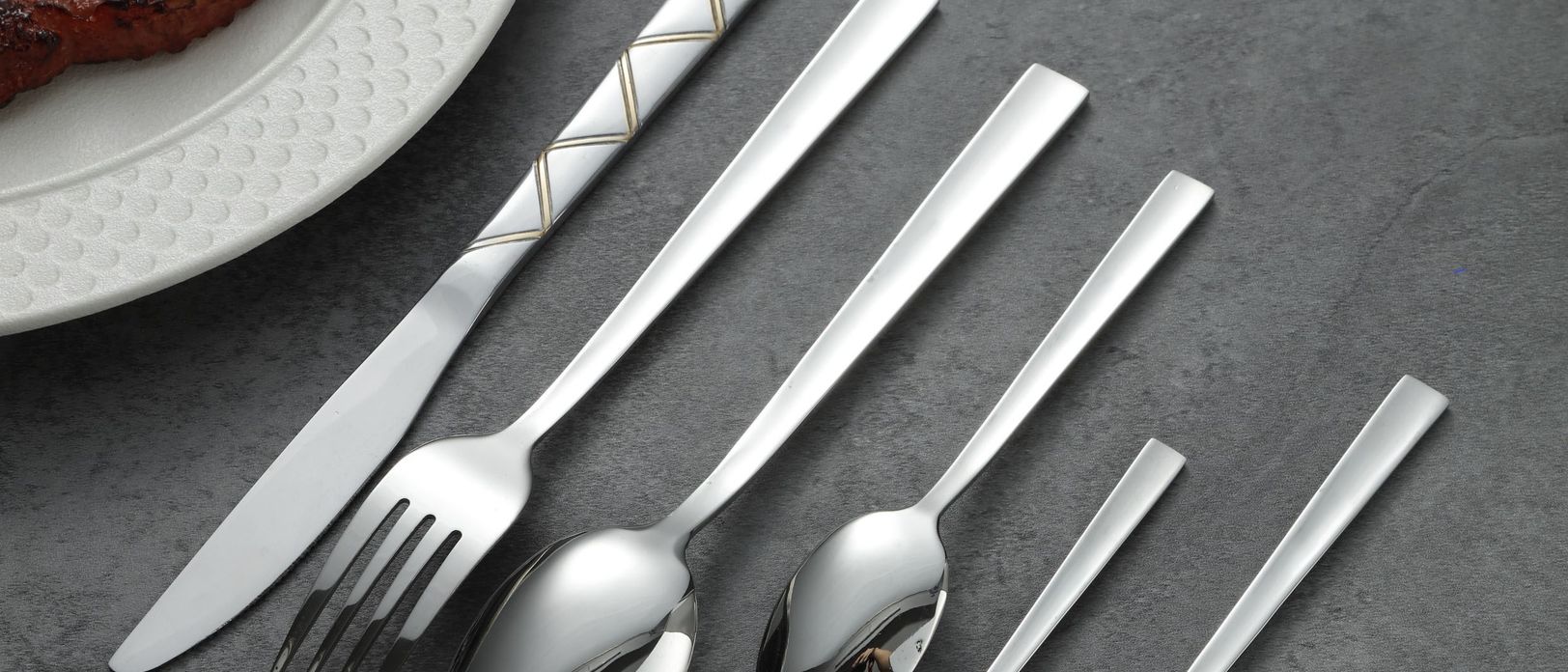
What Happens to Recycled Stainless Steel Cutlery? The Truth About "Second-Hand" Flatware
104°C melting, 100% recyclable without quality loss — but only if made from real 304 stainless steel. This article breaks down the full recycling process of stainless steel cutlery, explains how cheap alloys contaminate recycled batches, and shows how Glophee uses certified recycled 304 stainless steel with full material traceability.
In an era of increasing environmental awareness, more people are asking: what happens to recycled stainless steel cutlery when it reaches the end of its useful life? Can old forks and spoons truly be reborn as new flatware without compromising quality? And is it safe to buy second-hand or reclaimed cutlery?
This comprehensive guide answers every question you have about the stainless steel cutlery recycling process, including how to identify genuine 304 stainless steel that can be recycled indefinitely without degradation.
The Truth About Stainless Steel: 100% Recyclable, Forever
Unlike plastic utensils that degrade with each recycling cycle, stainless steel is 100% recyclable without any loss of quality. A 304 stainless steel fork recycled today can become a brand-new 304 fork tomorrow — with identical strength, corrosion resistance, and food safety properties.
The numbers are compelling: approximately 80% of stainless steel produced globally contains recycled content, and the material can be recycled infinitely without downcycling (unlike aluminum or paper). The stainless steel industry has a closed-loop recycling rate of nearly 92% for end-of-life products in developed markets.
How Stainless Steel Cutlery Is Recycled: Step by Step
Step 1: Collection and Sorting
Used cutlery enters the recycling stream through municipal recycling programs, commercial kitchens upgrading their flatware, and scrap metal dealers. At the recycling facility, stainless steel is separated from other metals using powerful magnets (stainless steel is weakly magnetic) and eddy current separators.
Step 2: Shredding and Separation
The collected cutlery is shredded into small pieces, then passed through multiple separation stages to remove contaminants — plastic handle remnants, food residue, and non-ferrous metals. Advanced facilities use X-ray fluorescence (XRF) sorting to identify and separate different stainless steel grades (304 vs 201 vs 430).
Step 3: Melting at 1500°C
The cleaned stainless steel scrap is fed into an electric arc furnace at approximately 1500°C (2732°F). At this temperature, the steel becomes molten, and any remaining impurities float to the surface as slag. New alloying elements — chromium, nickel, and manganese — are added to restore precise composition, ensuring the recycled metal meets 304 or 316 grade specifications.
Step 4: Casting and Hot Rolling
The molten steel is cast into slabs or billets, then hot-rolled into sheets of the desired thickness. These sheets become the raw material for new cutlery manufacturing, with identical material properties to virgin stainless steel.
Step 5: Cutlery Manufacturing
The recycled stainless steel sheets go through the same manufacturing process as virgin material: blanking (cutting the shape), forming, heat treatment, grinding, polishing, and final inspection. The finished cutlery is indistinguishable from — and identical in quality to — products made from newly mined materials.
The Hidden Problem: Not All Stainless Steel Can Be Safely Recycled
Here’s the critical issue most consumers don’t know: low-grade stainless steel (201, 202, or unknown alloys) can contaminate entire recycling batches. When 201 stainless steel (which contains higher manganese and lower nickel) mixes with 304 scrap, the resulting recycled material may not meet food-grade safety standards.
This is why reputable manufacturers like Glophee use only certified 304 stainless steel with full material traceability. Every batch of raw material — whether virgin or recycled — is tested for exact chemical composition before entering production. If a supplier cannot provide a material test certificate (MTC), there is no way to guarantee the recycled content is food-safe.
Is Second-Hand Cutlery Safe to Buy?
Second-hand or thrift store cutlery can be perfectly safe — provided it meets these criteria:
- Visual inspection: No rust, pitting, or corrosion spots
- Magnet test: A weak magnetic attraction is normal for 304; strong attraction suggests lower-grade steel that may not be food-safe
- Markings: Look for "18/8", "18/10", "304", or "Stainless" stamps
- Thorough cleaning: Wash in hot, soapy water or run through a dishwasher cycle before first use
However, second-hand cutlery from unknown sources carries risks: you don’t know the original alloy composition, and decades of use may have worn away surface passivation, potentially exposing underlying metals.
Glophee’s Commitment to Sustainable Manufacturing
At Glophee, sustainability is built into our manufacturing DNA:
- Certified recycled 304 stainless steel sourced from audited suppliers with full chain-of-custody documentation
- Zero-waste production: Metal offcuts from blanking and stamping are collected and returned to the recycling stream
- Energy-efficient furnaces: Our electric arc furnaces use 65% less energy than traditional blast furnace methods
- Traceable material certificates provided with every order, confirming the exact chemical composition of the steel used
Contact Glophee to learn more about our sustainable flatware manufacturing or to request material test certificates for your wholesale or OEM cutlery order.
Frequently Asked Questions
Can stainless steel cutlery go in household recycling?
Yes, but check your local recycling guidelines. Many municipal programs accept scrap metal, including stainless steel cutlery. Alternatively, drop it at a scrap metal recycling center.
How many times can stainless steel be recycled?
Indefinitely. Stainless steel does not degrade during the recycling process, so it can be recycled infinitely without quality loss.
Is recycled stainless steel as strong as virgin stainless steel?
Yes. When properly processed with the correct alloying elements, recycled 304 stainless steel is chemically and physically identical to virgin material.
Does Glophee use recycled material in their cutlery?
Yes. Glophee sources certified recycled 304 stainless steel and provides full material traceability with every order.
Should I throw away old cutlery or donate it?
Donate usable cutlery to thrift stores or charity organizations. Recycle damaged or worn-out pieces at a scrap metal facility.