
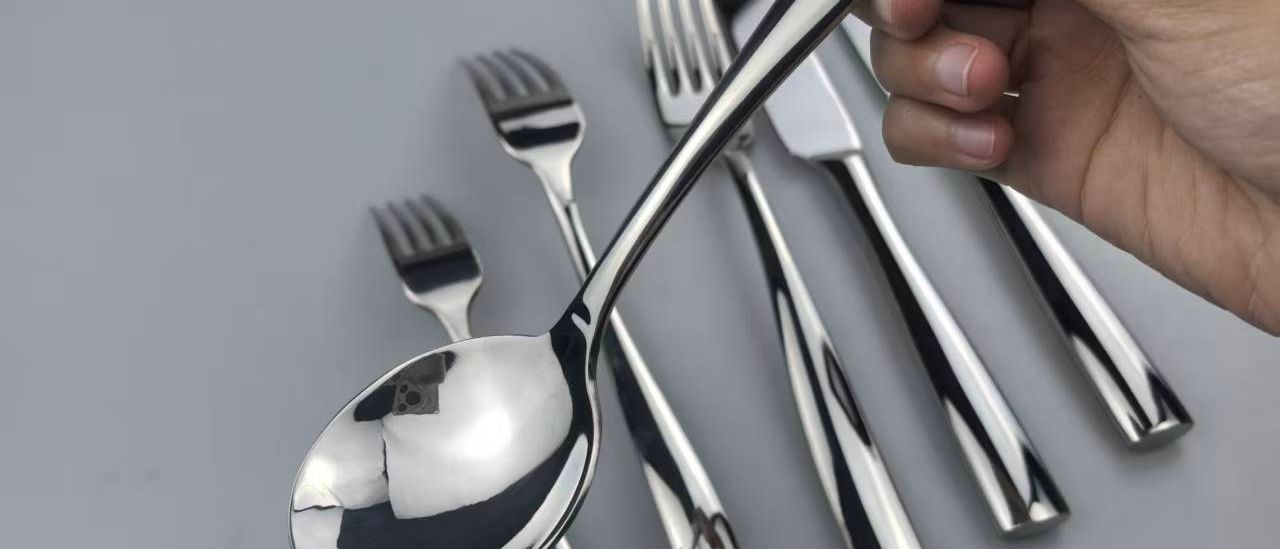
Is 201 Stainless Steel Safe for Cutlery? The Hidden Risks You Need to Know
Discover why 201 stainless steel cutlery poses health and durability risks, how it differs from safe 304-grade steel, and what to look for when buying cutlery.
What Is 201 Stainless Steel?
201 stainless steel is an austenitic chromium-nickel-manganese alloy introduced as a lower-cost alternative to 304 stainless steel. Its composition typically includes roughly 16–18% chromium, 3.5–5.5% nickel, and 5.5–7.5% manganese, with the remainder being iron. The reduced nickel content is the key cost-saver—nickel being the most expensive component in stainless steel alloys. While 304 stainless steel contains about 8–10.5% nickel, the 201 grade substitutes manganese and nitrogen for some of that nickel to maintain austenitic structure.
This "nickel reduction" strategy makes 201 stainless steel noticeably less resistant to corrosion than its 304 counterpart. For food-contact applications such as cutlery, this matters more than many consumers realize. The kitchen is a corrosive environment: acidic foods, salty sauces, dishwashing detergents, and temperature fluctuations all challenge material integrity daily.
Why Is 201 Stainless Steel Used in Cheap Cutlery?
If 201 stainless steel is less corrosion-resistant and potentially less safe for food contact, why do so many manufacturers still use it? The answer is straightforward: cost reduction.
Nickel prices fluctuate significantly on global commodity markets. During periods of nickel price inflation, manufacturers face strong pressure to protect profit margins. Switching from 304 to 201 stainless steel reduces raw material costs substantially—sometimes by 20–30%—with minimal visible difference to the untrained eye. This makes 201-based cutlery extremely attractive for:
- Budget consumer markets: Price-sensitive shoppers often choose the cheapest option without understanding the material difference
- Bulk commercial procurement: Restaurants, hotels, and catering companies buying in high volumes prioritize upfront cost over longevity
- Online marketplace listings: Many third-party sellers on major e-commerce platforms obscure material specifications behind vague terms like "stainless steel" or "high quality"
- One-time use scenarios: Some manufacturers assume cutlery will be discarded after limited use, making long-term corrosion resistance irrelevant
Consumer unawareness compounds the problem. Without metallurgical knowledge, most buyers cannot distinguish 201 from 304 cutlery by appearance alone. By the time rust spots appear or the finish deteriorates, the product has often exceeded any reasonable return window.
Risks: Rust, Leaching, and Heavy Metals
The health and safety concerns with 201 stainless steel cutlery are not trivial. They fall into three interconnected categories:
1. Corrosion and Rust Formation
201 stainless steel lacks the robust chromium-nickel oxide layer that makes 304 stainless steel highly corrosion-resistant. In a kitchen environment, this means:
- Surface pitting: Small corrosion spots develop where the passive layer breaks down, often undetectable until they spread
- Rust leaching into food: As corrosion progresses, iron oxide particles can migrate into food—particularly problematic with acidic dishes like tomato sauces, citrus marinades, or vinegar-based dressings
- Accelerated wear in dishwasher: Dishwasher detergents are highly alkaline and can accelerate corrosion on 201-grade surfaces, especially when combined with water hardness
2. Heavy Metal Leaching
Beyond rust, the manganese in 201 stainless steel presents a separate concern. While manganese is an essential trace mineral for human health in small amounts, chronic overexposure to manganese is neurotoxic. Research published in peer-reviewed journals has documented that:
- Manganese can leach from 201 stainless steel into food, particularly under high-heat cooking conditions
- Leaching rates increase significantly with acidic foods, prolonged cooking times, and surface damage
- The body's ability to excrete excess manganese is limited, leading to accumulation in brain tissue over time
This is why many health and materials science experts recommend avoiding 201 stainless steel for food-contact items altogether—especially cutlery, which contacts food during every meal.
3. Structural Durability Issues
From a practical standpoint, 201 stainless steel cutlery:
- Wears down faster, losing its polished surface more quickly
- Is more prone to bending or deformation under mechanical stress
- Shows visible degradation (discoloration, spotting) after relatively few uses compared to 304-grade equivalents
This means that even setting aside health concerns, 201 stainless steel cutlery offers poor long-term value. A piece that costs half as much upfront but fails after a few months is actually more expensive per use than investing in 304 stainless steel from the start.
How to Tell 201 vs. 304 Stainless Steel Cutlery
Spotting the difference between 201 and 304 stainless steel is challenging but possible with the right approach:
- Check the stamp or label: Quality manufacturers often stamp the stainless steel grade on the handle's underside. Look for "18/8," "18/10," or "304" (304-grade) versus "201" or "202" on the steel itself. Note that some budget manufacturers use deceptive stamps or omit grading entirely.
- Magnet test (imperfect but useful): Both 201 and 304 are technically "non-magnetic" in their fully annealed state, but cold-worked 201 can show slight magnetic attraction. A strong magnet sticking firmly to your cutlery may indicate lower-grade steel—but absence of magnetism does not guarantee 304.
- Observe corrosion behavior: If rust spots appear after brief dishwasher cycles or exposure to acidic foods, the cutlery is almost certainly not 304-grade.
- Price as a signal: If a set of "stainless steel" cutlery seems unusually cheap, it almost certainly uses a lower grade. Genuine 304 stainless steel cutlery at market rates rarely sells at extreme discounts.
- Request material certifications: Reputable suppliers should provide material compliance certificates confirming the stainless steel grade. A supplier unwilling to certify their product's steel grade is a major red flag.
The Connection Between 201 Stainless Steel and High Manganese Steel
Both 201 stainless steel and high manganese steel share a troubling characteristic: they reduce or eliminate nickel (a corrosion-resistant element) in favor of manganese to cut costs. While high manganese steel uses very high manganese levels (11–14%) and 201 uses more moderate amounts (5.5–7.5%), both create similar risk profiles for food-contact applications.
Consumers who understand the dangers of high manganese steel in cutlery should apply the same skepticism to cutlery marketed as "201 stainless steel." The economic incentive to substitute cheaper, less-safe materials is identical in both cases.
Frequently Asked Questions
Is any cutlery made with 201 stainless steel safe to use?
Most safety authorities and materials science experts recommend avoiding 201 stainless steel for food-contact cutlery. While brief, occasional use of a single 201-grade utensil is unlikely to cause acute health effects, regular use—especially with acidic foods or in dishwashers—increases the risk of manganese and heavy metal leaching over time.
What is the best stainless steel grade for cutlery?
304 stainless steel (also labeled as 18/10 or 18/8 depending on nickel content) is the gold standard for food-grade cutlery. It offers superior corrosion resistance, minimal metal leaching, and excellent durability. 316 stainless steel provides even greater corrosion resistance and is preferred for marine or medical applications.
Can I test my cutlery at home to determine if it's 201 or 304?
You can perform a rough home test using a stainless steel testing solution (available from industrial supply stores), which detects nickel content. Higher nickel content (indicative of 304) produces a specific color reaction. This is more reliable than the magnet test but still not as definitive as laboratory-grade spectroscopy.
Why does my stainless steel cutlery rust even though it is labeled "stainless"?
If your cutlery rusts quickly, it is likely made from a lower-grade stainless steel such as 201, 410, or 430—not 304. "Stainless" does not mean "stain-proof"; it means "stain-resistant." Lower grades lack sufficient chromium and nickel to withstand kitchen conditions.
Conclusion
201 stainless steel cutlery is a budget option with genuine risks that most consumers are never warned about. The combination of reduced corrosion resistance, manganese content, and potential for heavy metal leaching makes it a poor choice for everyday food contact. The old adage holds true: you often get what you pay for.
For safe, durable, and truly "stainless" cutlery, always look for 304 stainless steel (18/10 or 18/8) from reputable manufacturers. The minimal extra cost upfront saves you from health concerns, premature replacement, and the frustration of watching your cutlery deteriorate. Your family's safety at the dinner table deserves that extra consideration.